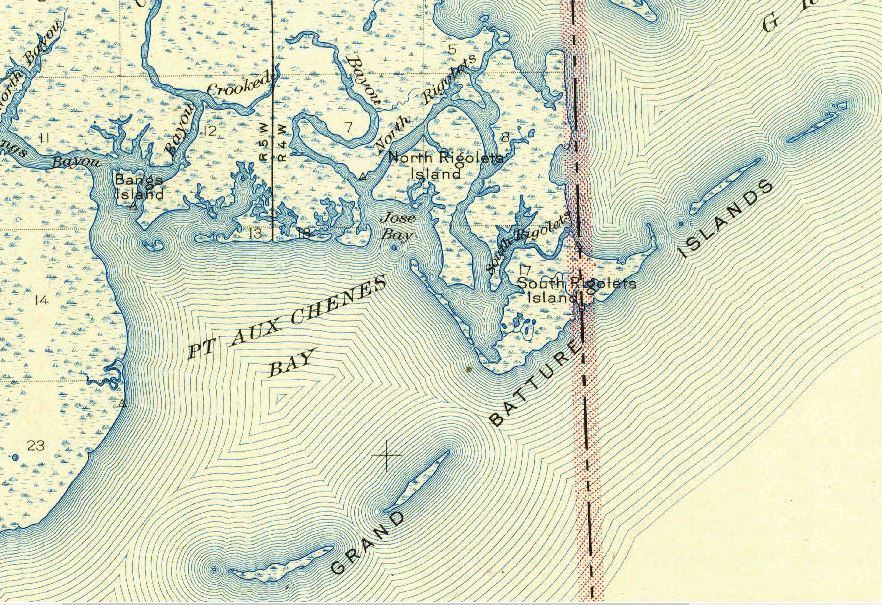
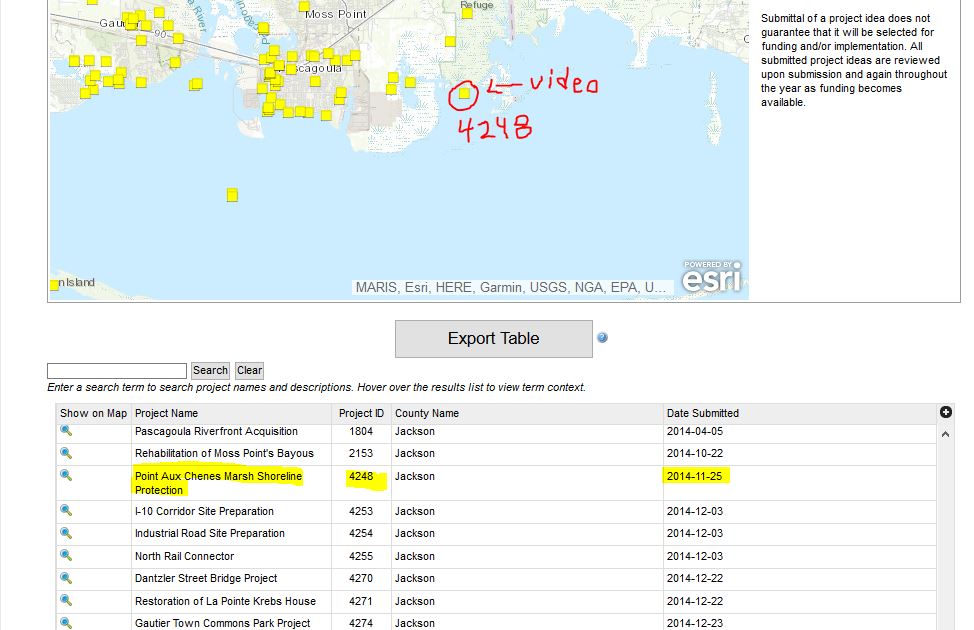
When BP settled the big lawsuit over the oil spill, the MDEQ set up a proposed project site where people could enter ideas for projects to help recover the marsh. In 2014 I responded with my own project which got a number, 4248. That project suggested to restore Grand Batture Island which existed back in 1850 but eroded over the years, leaving the Grand Bay shoreline exposed to wave action. As you can see, my project was the only project suggested at the Grand Batture location.
I wrote articles, made calls, sought money for research and eventually… gave up. I feel bad about giving up, but after my own fly fishing organization that I support denied me the grant funds to better describe the project, I pretty much felt like a voice in the forest and the whole area was simply…doomed.
But this weekend a friend notified me that the Gulf Coast Ecosystem Restoration Council —allocated $63 million from the Deepwater Horizon oil spill settlement to restore Grand Batture Island in the Mississippi Sound.
Oh my God, they’re actually going to do it. No, I don’t want credit, mainly because I don’t deserve any because for all my efforts, no one seemed to ever take me seriously or even return my phone calls. No, I don’t think I had a single thing to do with it, but in fact, my dream is coming true now and I have to at least acknowledge it. In fact, this project is exactly what I wanted which is not just a bunch of rocks to protect the shoreline from wave erosion but in fact a restoration of the old Grand Batture Island. Living shoreline! As I just returned from a trip fly fishing in Grand Bay and was greatly saddened by the lack of fish and loss of habitat, hearing this makes up for the poor fishing.
For information on the what the project means to us, I am going to reference my own article I wrote in 2017,
Support Project 4248, Protect Point Aux Chenes Bay Shoreline!
The planned project is funded by approximately $63.6 million in awards from the RESTORE Council and the Gulf Environmental Benefit Fund, which distribute money from the Deepwater Horizon oil spill settlement. Mississippi leads the effort, receiving the bulk of the funding to dredge and place material on the seafloor, while Alabama receives $11.95 million for joint planning and implementation.
Key details of the restoration include:
Timeline: With engineering and permitting phases starting now, construction is expected to begin in 2030 or 2031 and take several years to complete, making this the first Deepwater Horizon restoration project to span state lines.
Living Shorelines: Engineers will use rocks, oyster shells, and native marsh grasses to trap sediment and dissipate wave energy, preventing the newly placed material from washing away.
Ecological Benefits: The restored island will protect saltwater marshes behind it, stabilizing salinity levels and providing nursery habitats for marine life and nesting areas for shorebirds and diamondback terrapins.
Maybe I’ll even be able to appreciate the results of this project in the future with a fishing trip to Grand Batture Island. I certainly hope so.

