In fly casting, I pre-load by slipping a little line at the end of the back-cast. I do this for both accuracy and distance.
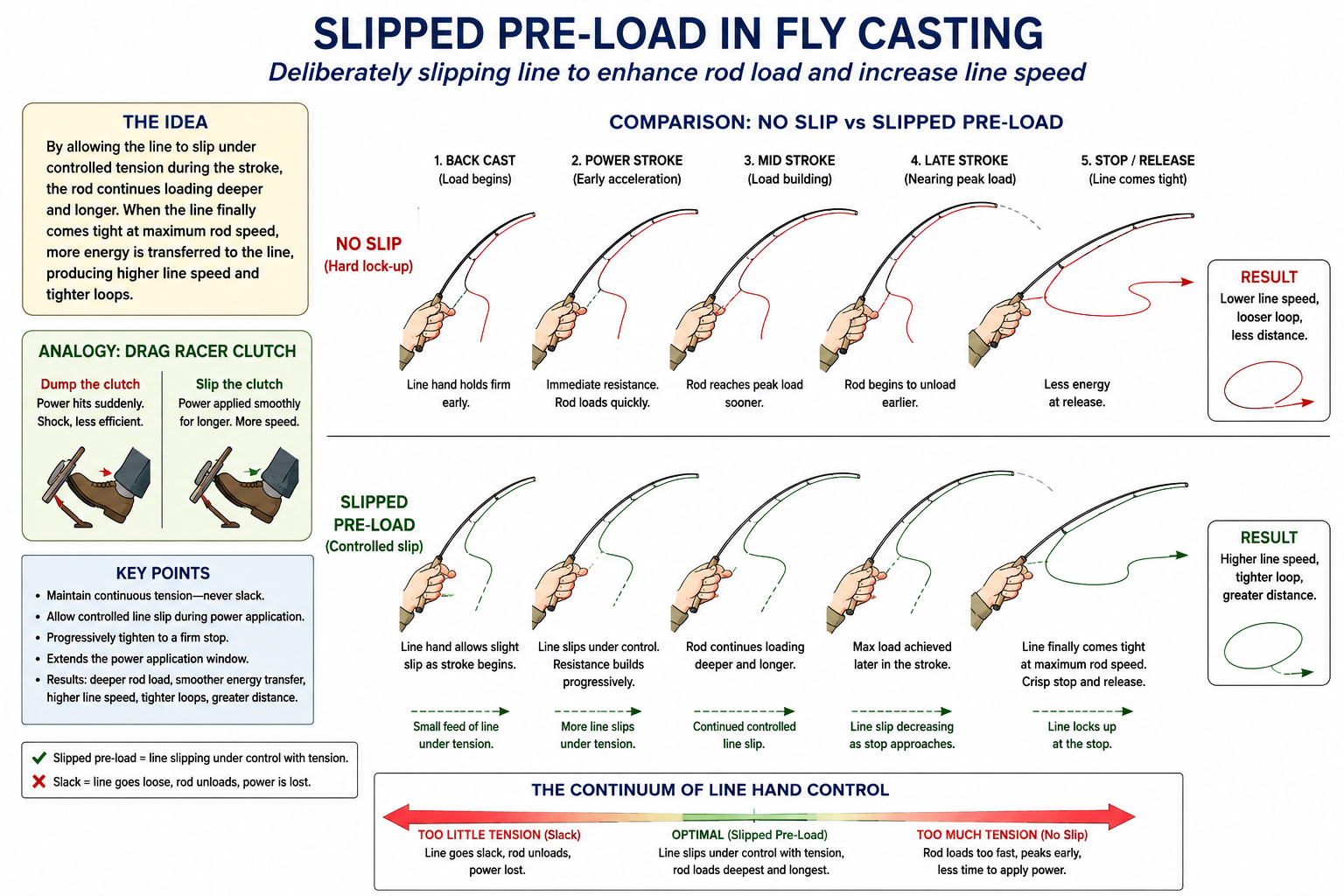
More precisely, I allow a controlled amount of fly line to slide through my line hand during the back-cast so the rod loads more deeply and smoothly before the final delivery.
Before I go any further I probably need to define some terms.
- Pre-loading = establishing rod bend early. (This can be done without slipping line but slipping line improves the rod bend.)
- Slipping line = dynamically feeding line during the load to maintain or increase the bend.
Why it helps:
- Prevents an abrupt “hit” or what I call a “jounce” on the rod
- Smooths acceleration
- Keeps tension continuous
- Can increase line speed, accuracy and distance
- Helps with very long casts where carrying all the line aerialized is difficult
A common example is in distance casting:
- The caster starts the back cast with tension,
- allows a few inches/feet of line to slip,
- the rod continues loading progressively,
- then the final haul and stop produce high line speed.
For both accuracy and distance the “slip” should be short. A short slip has more speed, a long slip loses speed and the subsequent load is mostly from weight. The energy from speed is smoother. If too much line slips:
- rod load collapses,
- timing gets mushy,
- loops open excessively,
- and accuracy suffers.
Skilled casters do a controlled feed, without simply letting line run freely
I have been practicing for an upcoming tarpon trip and have come to the conclusion that in any cast over 40 feet my accuracy is best when I do a “slipped pre-load”. If you’re a saltwater fly fisher or thinking about becoming one, don’t stop at double-hauling, add pre-loads to your casting for accuracy and of course, distance.
 "Samurai" Fly Shop