I was at a friend’s lake recently. It is an old lake with the oldest portion of it being over 100 years old and the newest portion was built in the 1950’s. The 100 year old portion has silted in and so has become very shallow over most of it and naturally the fish like this area for early spawning because it warms up sooner than the rest of the lake.
I was fly fishing by wading in the shallow water, but due to the deep, soft, silt I wasn’t able to go much further than about twelve yards. Trees line the bank everywhere so I was casting using a Tongariro cast (see footnote 1) and also using my own “slide-load backcast” (see footnote 2) presentation to get the fly out as far as I could. There are some enormous grass carp that mill around in the shallows and since I had caught one recently on a chartreuse microjig, I figured a chartreuse mop fly might catch both the bluegills as well as the big grass carp.
I had caught about 8 or 9 nice bluegills and suddenly I got a take and when I set the hook I could feel the weight and figured it must be a grass carp. I was astonished when a great big bass leaped from the water, performing a complete somersault in the air. I was rigged for bream with a 6 wt flyrod, click and pawl reel and an 8 lb tippet. Actually the tippet was probably much less than 8 lb because it was old and brittle. Whenever I take a fly off I just break it with my hand because my tippet material breaks so easy.
So I was very much concerned about whether I could actually land this fish considering the fact that I was in lily pads, though the stalks hadn’t come back from the winter yet. But the stalks are tough even when there aren’t many pads.
I had no drag in the reel, just click and pawl. To compensate I just pointed the rod at the fish whenever he would surge. I finally tired him to the point where I could land him and took the video below. I normally target bream and of course I catch incidental bass but they are the typical 1.5 to 2 lb’ers with an occasional 3 or even 4 lb’er, so I was pretty excited with this fish and you can hear it in my voice if you play the video.
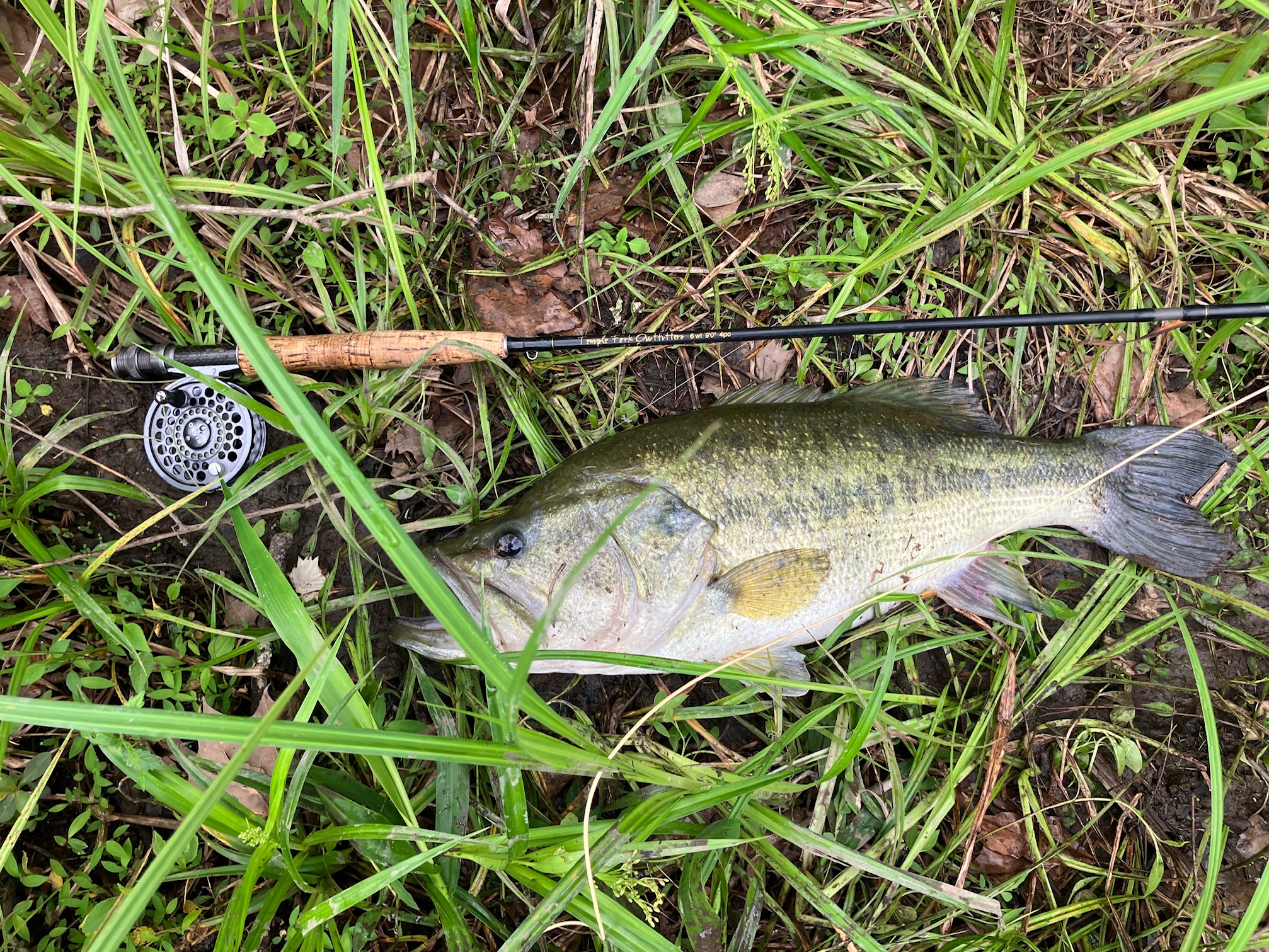
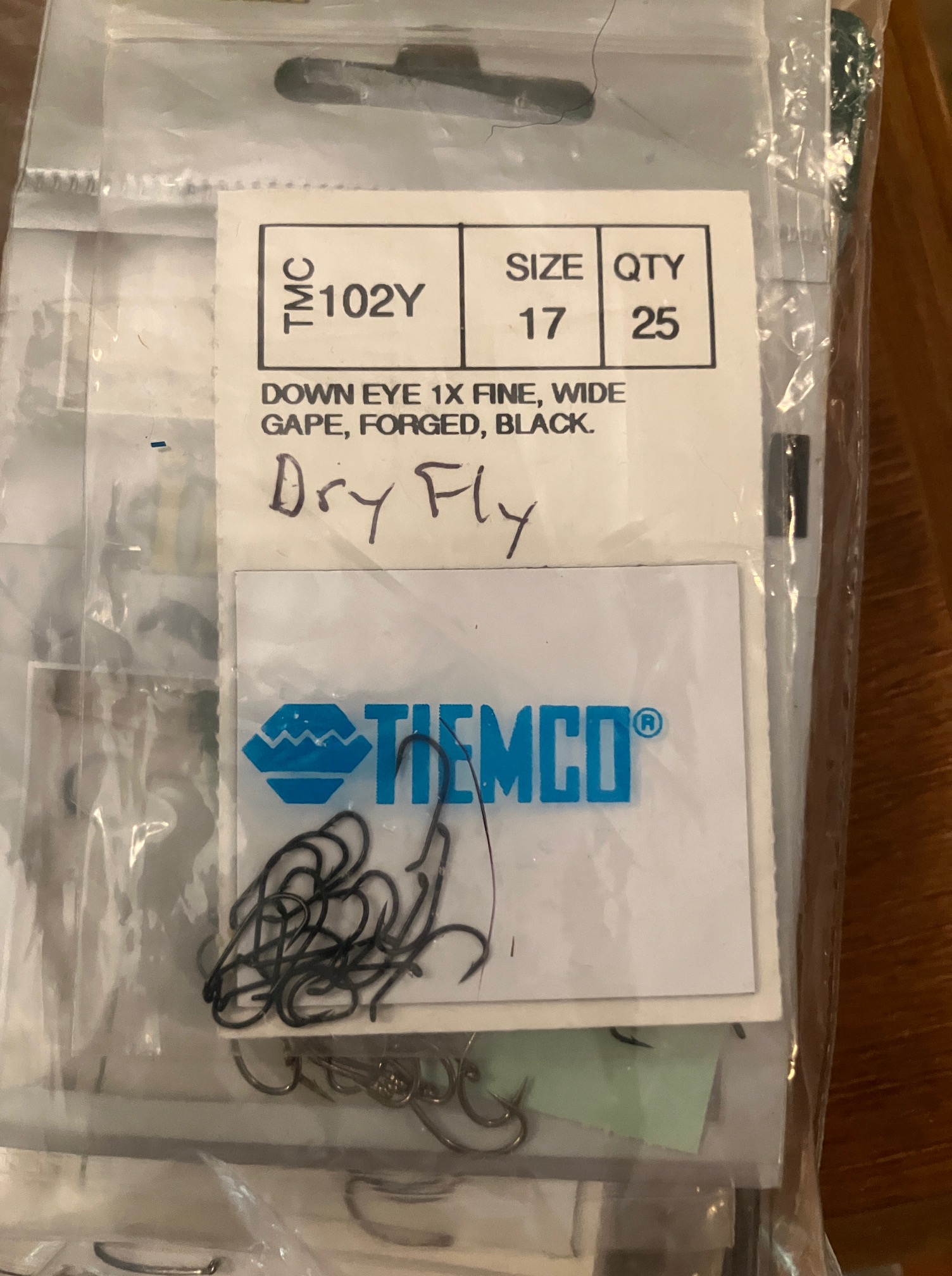
This fish measures roughly at 23 inches based on the photo above. Length to weight calculators are all different but taking calcs from several of them I can say this fish is somewhere between 7.5 and 9 lbs. To me, it’s a big fish for a size 17 dry fly hook (below), but then I don’t trout fish much. I did do an Alaska trip catching trophy rainbows up to 9 lbs, but then those Owner size 2 bead hooks we were using could have caught a tarpon and we were using 20 lb tippet!
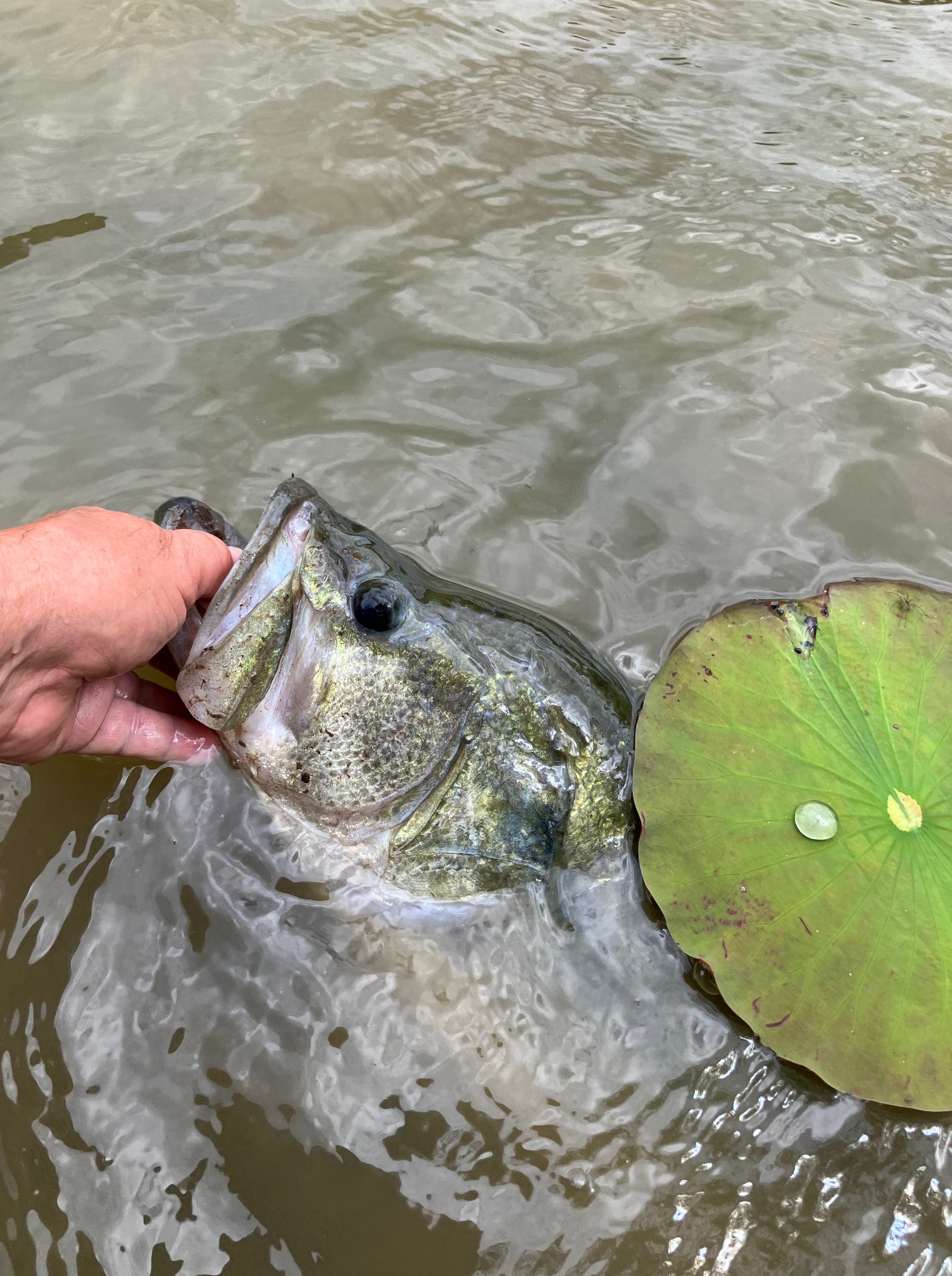
All I care about is this fish is definitely a personal best. He was a lot of fun. I took my time in resuscitating him for the next guy. See below:
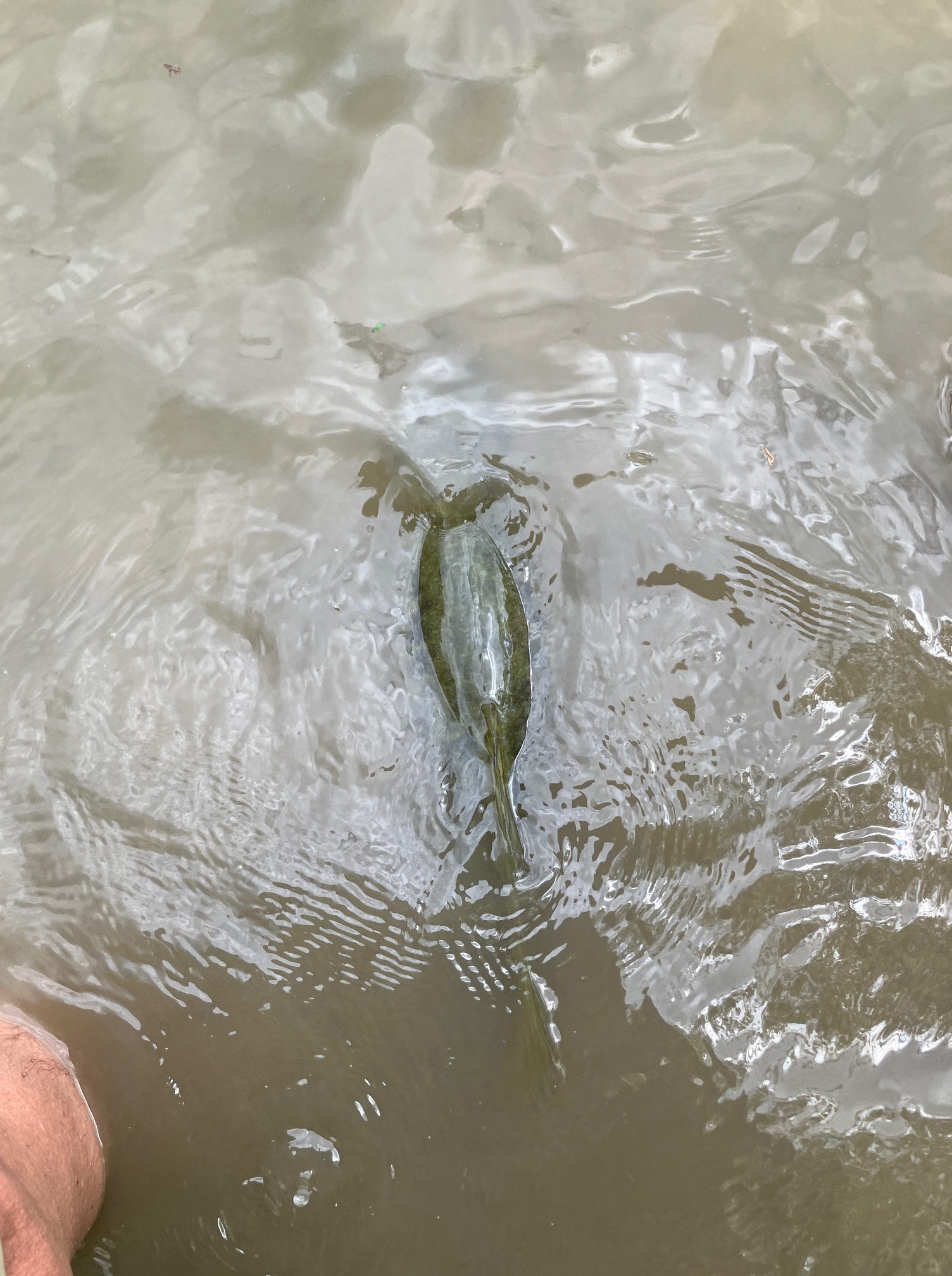
Below, he swims away for another catch on another day. (Billy Bass sings “Take me to the river”.)
Footnote 1:
The Tongariro Roll Cast (TRC) is a highly specialized single-handed fly casting technique developed on New Zealand’s Tongariro River to deliver heavy, weighted flies (like bombs or nymphs) over long distances (typically 60–80 feet) in confined spaces where overhead casting is impossible.
While it shares functional similarities with the Perry Poke, the TRC is distinct as a single-handed maneuver rather than a true Spey cast, though it utilizes a waterborne anchor and a massive D-loop formed by extra line to load the rod. It is particularly effective for upstream nymphing or fishing in still water, allowing anglers to bypass the need for backcasting room and reducing stress on the caster’s joints.
Although often debated regarding its classification, the TRC is recognized as a unique evolution of Spey casting principles adapted for the specific conditions of the Tongariro River, with Herb Spannagl cited as a primary authority and popularizer of the technique.
Footnote 2:
For those of you unfamiliar with slide-loading, it is sliding the rod forward down the line as line is still slipping and then catching the line and hauling. The combined effect of inertia from the line moving one way and the rod moving the other way and grabbing that energy by pinching the line and hauling provides a great deal of load resulting in much more distance in my back cast presentation than I have previously experienced.
 "Samurai" Fly Shop